
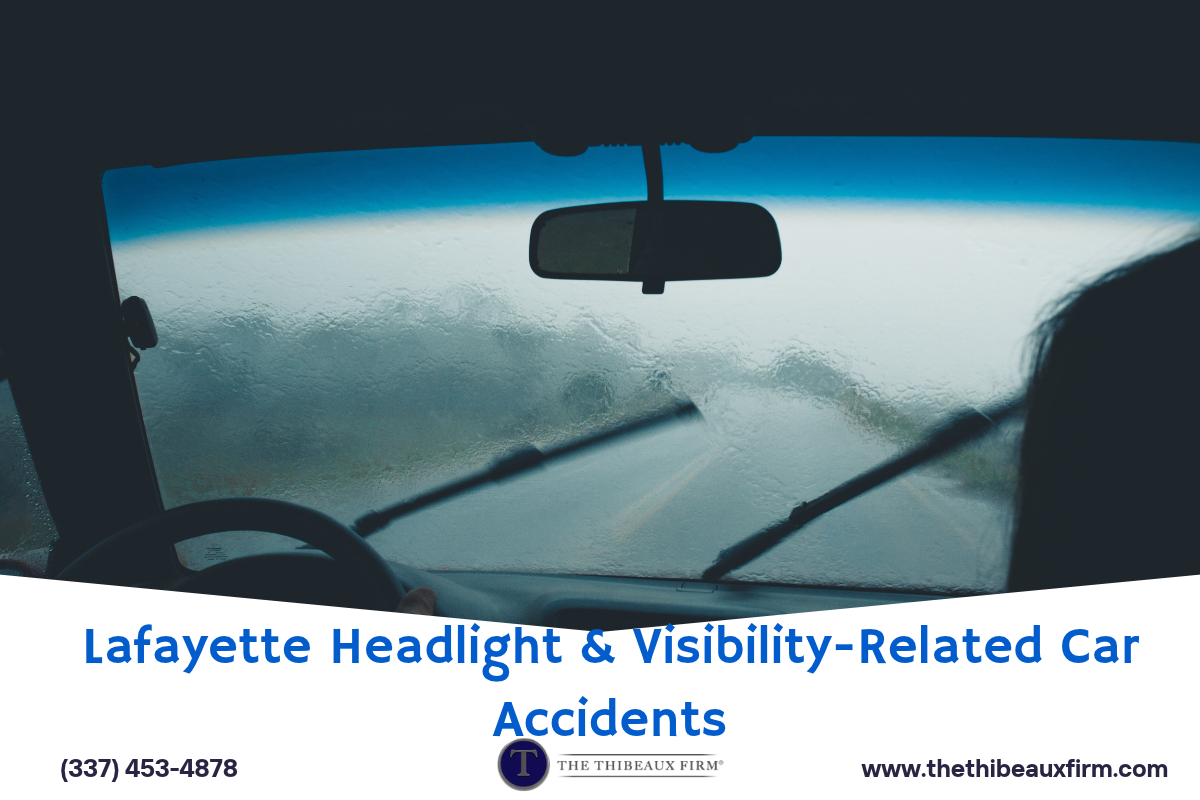
If you were involved in a car accident because it felt like another driver came out of nowhere, either because their headlights were off or their high beams made it difficult to see, you may be able to recover compensation. In these situations, insurance companies may argue that you should have seen the other vehicle, but determining fault can be difficult when visibility is limited.
Louisiana law requires drivers to use headlights under specific conditions, and violations of those requirements can be important evidence in determining who caused a car crash. For people injured in visibility-related car accidents, details such as lighting conditions, weather, headlight use, and each vehicle’s position can matter when establishing fault
If you were injured in a no headlights or another visibility-related crash, a Lafayette headlight car accident lawyer can help you understand your legal options. Attorney Omar Thibeaux offers free initial consultations to car accident victims.
Why Choose Attorney Omar Thibeaux After a Lafayette Headlight Crash
After a crash, you deserve legal representation that takes your concerns seriously and works to protect your interests. Attorney Thibeaux and his legal team are respectful, understanding, and determined to fight for compensation for their clients. As the “25% Attorney,” Attorney Thibeaux charges a flat 25% fee when he wins compensation for personal injury victims. His law firm also offers free consultations, giving you a chance to discuss your accident and potential legal options without paying an upfront fee.
Contact us today for your free consultation. There are no out-of-pocket costs for us to get started on your personal injury case, and you pay no attorney fees unless we successfully resolve your matter.
When Does Louisiana Law Require Drivers to Turn on Their Headlights?
Louisiana’s headlight law requires drivers to use their headlights in several situations. Under La. R.S. 32:301, headlights are required in the following situations:
- From sunset to sunrise
- When weather conditions make it difficult to see people or vehicles from 500 feet ahead
- When windshield wipers are being used continuously because of fog or precipitation
- When driving in a tunnel
These requirements mean a driver may be violating the Louisiana headlight law even during daylight hours. For example, a driver who continues driving with their headlights off during a heavy rainstorm while using their windshield wipers may have violated the law. If the other vehicle was difficult to see because the driver failed to use headlights, that violation may be relevant when determining fault.
Common Headlight Failures Behind Visibility-Related Car Accidents
Effective headlights help drivers see other vehicles, pedestrians, and hazards in time to avoid a collision. In fact, the Insurance Institute for Highway Safety found that although driving at night is three times as risky as driving during the day, crash rates per mile are about 20 percent lower when using headlights with a “good” rating than those with a “poor” rating.
Several types of lighting failures can contribute to crashes in Lafayette and throughout Louisiana, including the following.
Driving Without Headlights at Dusk, in Rain, or in Fog
Drivers who forget to turn on their headlights at dusk or keep driving without them in rain or fog make their vehicles hard to see. Louisiana law requires headlights in certain low-visibility conditions, including when windshield wipers are used continuously because of fog or precipitation. A driver who ignores these requirements may be held responsible if their failure to obey the law contributes to a crash.
High-Beam Glare from Oncoming and Following Drivers
High beams can temporarily impair another driver’s vision when used around nearby traffic. Under La. R.S. 32:322, drivers must dim their high beams within 500 feet of an approaching vehicle and within 200 feet when following another vehicle. Failing to dim high beams can create dangerous glare and increase the risk of a headlight glare accident.
Burned-Out, Dim, or Misaimed Headlights
A burned-out bulb, weak headlight, or improperly aimed beam can reduce a vehicle’s visibility or leave parts of the road poorly illuminated. Drivers should keep their headlights in working order and properly adjusted.
Overdriving the Headlights
Overdriving your headlights occurs when you travel too fast to stop within the distance your headlights can illuminate. Even with working lights, a driver going too fast may not be able to stop in time for a pedestrian, stopped vehicle, or road hazard. Drivers must adjust their speed to road, weather, and visibility conditions.
How Louisiana Comparative Fault Applies When Visibility Is Disputed
After an auto accident, the other driver’s insurance company prioritizes protecting its policyholders’ interests and will try to uncover evidence that you were at fault. However, even if they find evidence against you, the other driver’s mistakes, such as lighting violations, also matter in determining how much financial compensation you may be owed.
Due to updated legislation effective January 1, 2026, Louisiana follows a modified comparative fault system. Under this rule, an injured person who is found 51 percent or more at fault cannot recover damages. If they are found to be less than 51 percent at fault, their compensation is reduced by their percentage of fault.
For example, if you are awarded $100,000 in compensation but found 20 percent at fault, your recovery would be reduced to $80,000. If you are found 51 percent at fault under Louisiana comparative fault, you cannot recover damages under this rule.
In a visibility-related car accident, evidence of the other driver’s lighting violations, weather conditions, and how far the vehicle could be seen may help establish how the crash happened and who was responsible. A Lafayette car accident lawyer can help assess the evidence, negotiate with the insurance company, and advocate for fair compensation under the law.
Evidence That Can Prove a Headlight or Visibility Violation
Proving fault in a visibility-related car accident often requires evidence showing the lighting conditions and what each driver could reasonably see. It is important to preserve evidence as soon as possible before it becomes unavailable. Useful evidence may include the following:
- Police reports
- Photos and videos
- Witness statements
- Vehicle inspection records
- Dashcam or surveillance footage
Talk to a Lafayette Car Accident Lawyer About Your Visibility Crash
If you were injured in a headlights off car accident in Louisiana or another visibility-related crash, you don’t have to navigate the insurance claims process alone. Attorney Omar Thibeaux and his legal team take a caring, respectful, and understanding approach while working hard to protect injured clients’ rights.
The Thibeaux Firm has excellent reviews and impressive results. One client, Abbie H. shared in her verified Google Business Profile review: “They took care of everything after I got in an accident. Very professional. Very caring.”
We also secured a $1 million result in an 18-wheeler truck accident case. (Note that prior results do not guarantee a similar outcome.)
Best of all, we look out for your best interests, especially fighting for the compensation you deserve. As the “25% Attorney,” Attorney Thibeaux charges a flat 25% fee when he wins compensation for accident victims, which keeps more money in your pocket. This is lower than the standard percentage other personal injury attorneys would take, because, as Attorney Thibeaux says, “You Suffered the Pain – So You Deserve the Gain.”
Contact us today for a free, no-pressure consultation about your legal options.